ANTARCTICA FOR WOMEN 45+
Adventure without proving anything to anyone.
Choose the right expedition for your comfort, curiosity and confidence—whether you travel solo, with a friend or with a partner.
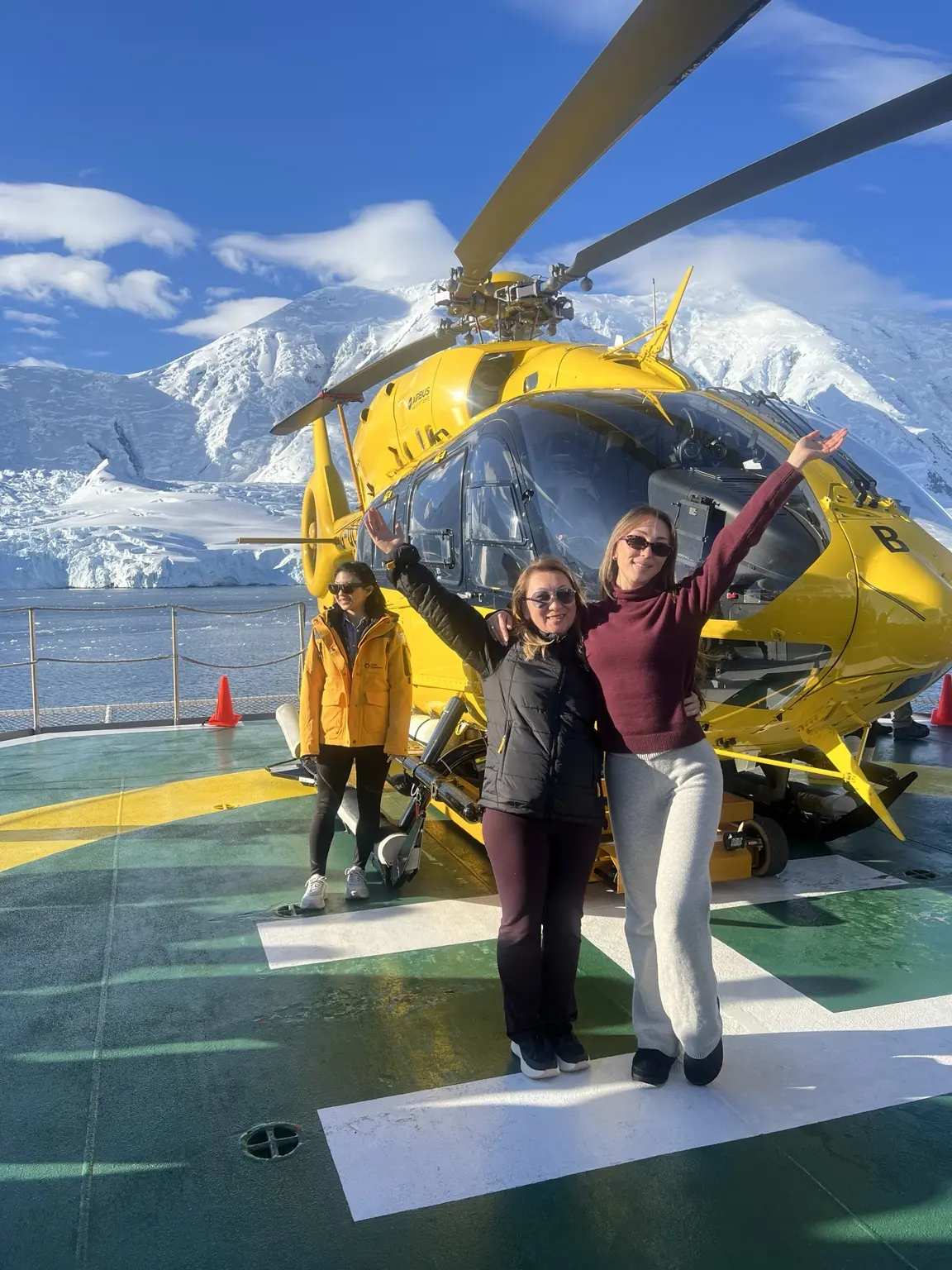
Antarctica is not reserved for extreme athletes or twenty-year-old backpackers. Women in their forties, fifties, sixties and beyond travel there for wildlife, beauty, perspective and the satisfaction of finally taking the journey they once postponed.
Age alone does not determine the right expedition. The useful questions are about mobility, energy, sleep, warmth, cabin comfort, trip length and how much support makes you feel confident.
Solo is a travel style—not a disadvantage
A solo traveler can choose a dedicated solo cabin, pay a single supplement or use an operator’s roommate-match program when available. Compare the privacy, price and terms of each option. A supportive onboard community often forms naturally through meals, lectures and landing groups.
Never assume “solo fare” means the same thing across operators. Ask what cabin, occupancy and cancellation terms apply.
Comfort begins with the ship and cabin
Look beyond décor. Consider motion, bed configuration, bathroom access, storage for layers, elevators, distance to the mudroom and how easy it is to reach outdoor decks. A well-chosen cabin can protect sleep and energy throughout an active itinerary.
- Ask which decks and cabin locations may feel more motion.
- Check elevator limitations during rough conditions.
- Compare the actual bathroom layout and shower access.
- Choose amenities you will truly use—not those that only photograph well.
Understand the physical rhythm before booking
A typical expedition may include stepping into a moving Zodiac, sitting on inflatable pontoons, wet or dry landings, walking on snow and standing outdoors in changing weather. Participation is always subject to the expedition team’s safety decisions.
- Request current mobility and eligibility information from the operator.
- Train for balance, stairs and comfortable walking before departure.
- Choose activities individually; you do not need to do everything to have a meaningful expedition.
Prepare for health and comfort privately
Carry adequate prescription medication and discuss personal concerns—such as motion sickness, sleep or temperature regulation—with your clinician. The U.S. State Department recommends insurance that addresses evacuation assistance, medical coverage and trip cancellation for Antarctica.
This guide is educational and not medical advice. Operator requirements and individual suitability must be confirmed before travel.
Choose support that reduces decision fatigue
A concierge can compare ships, cabins and terms, organize the decision sequence and stay available for practical questions. The goal is not to make the trip less adventurous; it is to remove avoidable confusion so your energy goes toward the experience itself.
КОРОТКО ПО-РУССКИ
Антарктика для женщин 45+: уверенно и с комфортом
Не нужно быть спортсменкой и никому ничего доказывать. Важно подобрать судно, каюту и ритм под вашу мобильность, сон, отношение к качке и уровень желаемой поддержки.
Для solo-путешествия сравните отдельную solo cabin, доплату single supplement и roommate match. Заранее уточните посадку в Zodiac, лестницы, страховку с medical evacuation и правила оператора. Вы можете участвовать только в тех активностях, которые подходят вам, и всё равно прожить полноценную экспедицию.
COMMON QUESTIONS
Questions travelers ask before booking
Am I too old for an Antarctica expedition?
There is no single age cutoff that answers this. Operators set current participation and medical requirements, and individual suitability depends on health, mobility and itinerary. Discuss personal medical questions with your clinician.
Can a woman travel solo to Antarctica?
Yes. Many expedition programs accept solo travelers, with options that may include dedicated solo cabins, single supplements or roommate matching. Availability and terms vary.
Do I have to join every landing?
No. Participation is optional and also subject to the expedition team’s safety decisions. You can choose a pace that suits you.